The summit trail up Diamond Head is a 1.6-mile round trip, short but steep. Yes, hike it. Switchbacks, stair sections, and a lit tunnel lead to an overlook of Honolulu and the south shore, about 45 minutes up. Diamond Head, or Lēʻahi, is the volcanic crater above the east end of Waikīkī, and Oʻahu’s most recognizable landmark.
If you’re visiting from out of state, you need an advance online reservation and pay an entry fee; anyone with a Hawaiʻi ID enters free. It’s one of the busiest hikes on Oʻahu. The trail is exposed, almost no shade, so start early. The crater holds more history than the view suggests: a Hawaiian religious site, a coastal-defense base whose 1908 trail and tunnels you climb through, and a 1960s concert stage.
Table of contents
- Diamond Head History
- The Diamond Head Hike
- Practicalities (mandatory reservations + directions)
- Things to do close to the Diamond Head State Park
Table of Contents
- Diamond Head History
- The Diamond Head Hike
- Practicalities (mandatory reservations + directions)
- Things to do close to the Diamond Head State Park
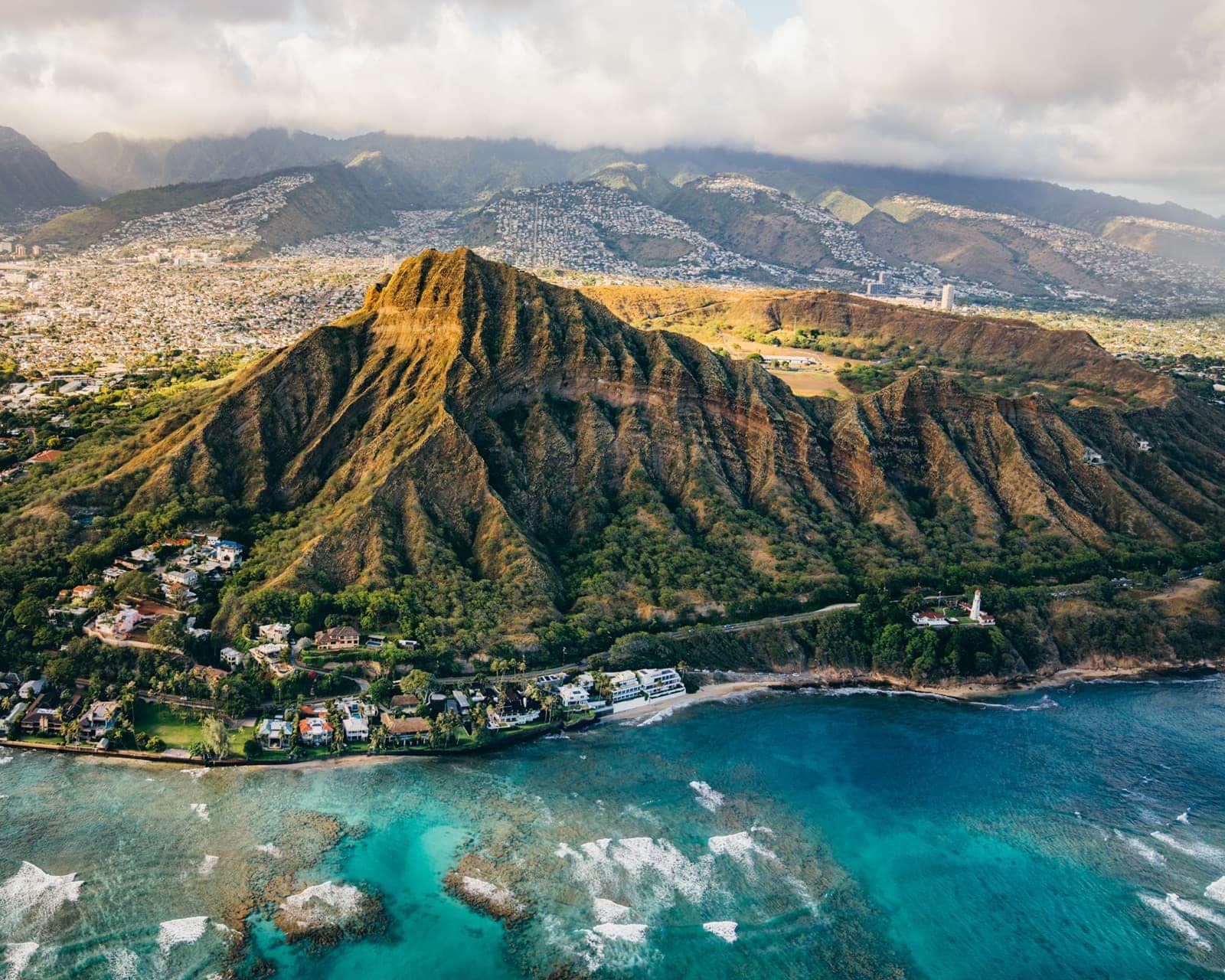
Diamond Head History and Cultural Significance
Diamond Head has a longer, stranger past than most visitors expect, and knowing a little of it makes the hike more interesting.
Geological History
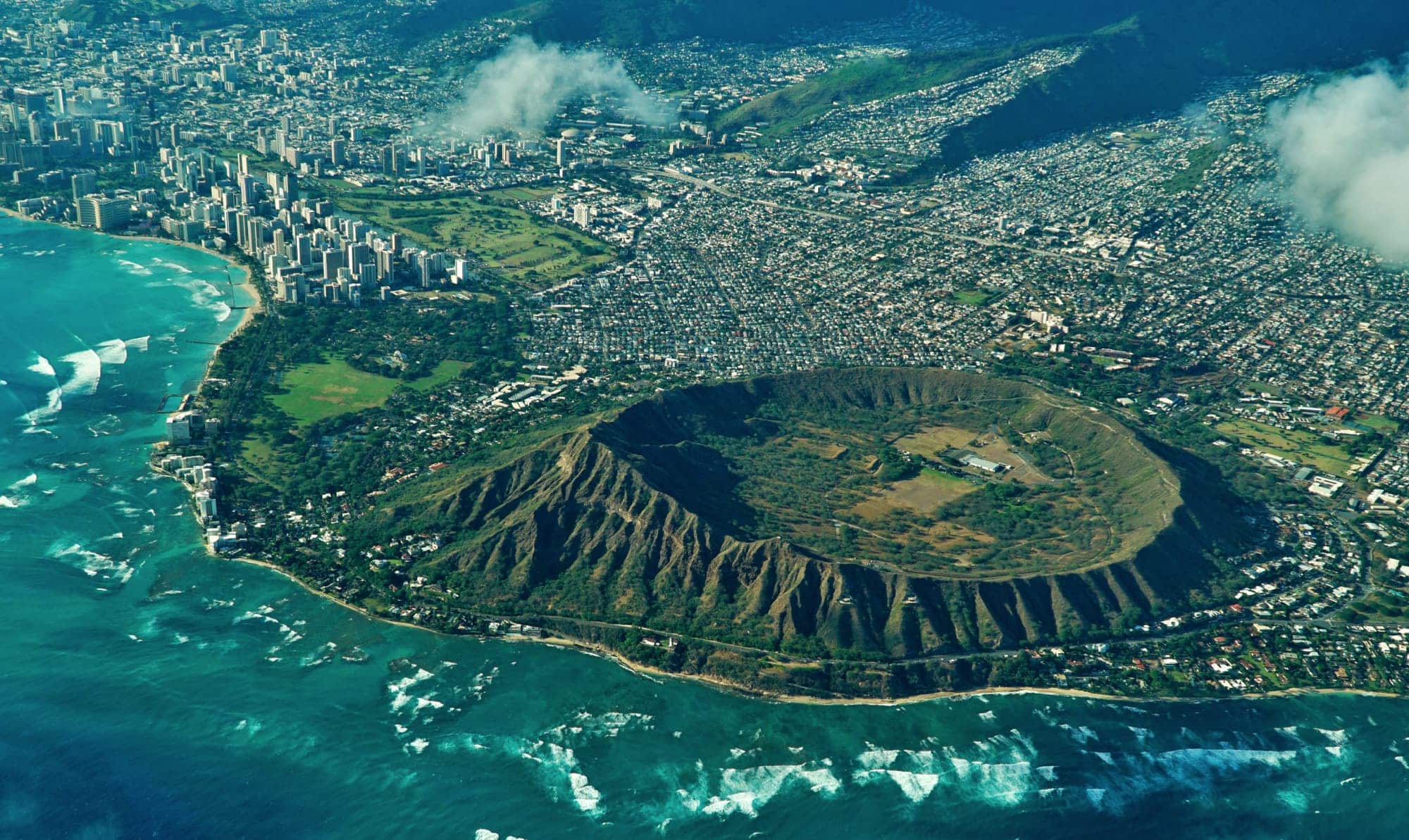
Geologists estimate Diamond Head formed about 400,000 to 500,000 years ago, in a late, rejuvenation-stage eruption of the Koʻolau Volcano, which is roughly 2 to 3 million years old. So Diamond Head is a crater on the flank of Koʻolau, created in the same run of eruptions that formed Koko Crater and Punchbowl, not a separate volcano. That distinction trips up a lot of visitors.
A Cultural Site for Hawaiians
Known to Native Hawaiians as Lēʻahi, Diamond Head was a site of reverence and worship. In the earliest accounts of Western contact with Hawaiʻi, eyewitnesses describe religious ceremonies on its slopes, including animal and human sacrifice.
The name Lēʻahi translates to “brow of the ʻahi [tuna],” after the ridgeline’s fish-fin profile. Hawaiians named things practically, usually for how they looked. The modern “Diamond Head” name comes from the late 1700s, when Western explorers and traders mistook the crater’s calcite crystals for diamonds.
In 1895, two years after the 1893 overthrow of the Hawaiian monarchy, a bloody battle between royalist rebels and the provisional government was fought on the slopes of Diamond Head.
A Military Base
In 1904, the U.S. government bought Diamond Head and turned it into a military base. Tunnels were carved into the crater, and batteries and bunkers were built along its walls. The trail to the summit went in around 1908 as part of the island’s coastal-defense system, so soldiers could reach the lookouts and firing stations. The military held Diamond Head until 1955, when it handed control to the then-Territory of Hawaiʻi (statehood didn’t come until 1959).
Modern Day Playground
Through the late 50s and early 60s, Diamond Head’s future was in doubt. Developers eyed its real estate as local residents pushed to protect it. The pitches included apartments, high-rise hotels, even a tramway to the rim, but preservation won out, thanks to years of activist work. The Diamond Head State Monument was established in 1962, the legislature protected parts of the crater as a historic site in 1965, and in 1975 the State Parks Division took over daily management and made public access a priority.
One fun aside: in the late 60s and 70s, when you could only get in by special permit, a radio station was allowed to run a concert series inside the crater, a Woodstock-style festival with acts like Carlos Santana and Buddy Miles. The concerts ran until the late 70s, when they were shut down over safety and other concerns. They came back briefly in 2006 and 2007, with Earth, Wind and Fire, Linda Ronstadt, Mick Fleetwood, the Steve Miller Band, and others.

You can read more about the concerts here. For a deeper look at Diamond Head’s history, local author Denby Fawcett’s “Secrets of Diamond Head: A History and Trail Guide” is worth a read.
The Diamond Head Hike
Diamond Head is one of the most popular hikes on Oʻahu. The summit opens to a wide view over Honolulu and the south shore, and most people are up there by mid-morning.
Good to know: out-of-state visitors pay to get in. It’s $5 per person to enter, plus $10 per vehicle if you park inside the crater (residents enter and park free with a Hawaiʻi ID). More on reservations and fees below.
The Diamond Head Summit Trail runs 1.6 miles round trip, climbing 560 vertical feet from the crater floor to the overlook. It’s less than a mile up, but the grade is steep and the sun is relentless, so it can be a real workout on a hot day. The first stretch is a paved walkway; after that the trail turns to a natural surface with switchbacks, steep stair sections, and a lit 225-foot tunnel. Benches and lookouts along the way give you places to catch your breath. Most people reach the top in about 45 minutes and come back down in about 30.
For more on the crater’s past, the Visitor Center has a self-guided audio tour on the crater’s geology and history.
Local Tips for Hiking Diamond Head
This is a busy trail, so set your expectations accordingly: you won’t have it to yourself. A few tips to make the visit smoother:
- Arrive very early, or later in the day. The gates are open 6 a.m. to 6 p.m., and the last reservation slot is 4:00 p.m. (you can still enter until 4:30 p.m.). If you’re driving, get there before 8 a.m., before the lot fills and before the heat sets in. Diamond Head is busiest between 8 a.m. and 4 p.m.
- If you can, don’t drive. Driving and parking at Diamond Head can be stressful. Consider the bus, the trolley, or a rideshare (see below).
- Don’t underestimate the hike. It’s not a long walk, but the steep grade and the total lack of shade can catch novice hikers off guard. Bring a hat, sunglasses, and sunscreen, drink plenty of water, and wear real walking shoes (no sandals).
- Bring some cash. The Visitor Center is small, but it sells souvenirs, and food trucks near the entrance sell smoothies, cut pineapple, and other cold treats.
- Check the Diamond Head State Monument website for the latest hours and fees.
See the following video to get a sense of what the hike is like:

Practicalities: making reservations and how to get to the Diamond Head State Park
Here’s how to get to Diamond Head, whether you need a reservation, and what it costs.